
First Apartment Essentials Checklist: Room by Room
Moving into your first apartment is equal parts exciting and expensive. The reality is you don’t need everything at once — but you do need the right things so you’re not eating cereal with a spatula or sitting on the floor for a week. This checklist breaks down what you actually need, room by room, in the order you should buy it.
One thing to know upfront: this list assumes you’re starting from nearly zero — no hand-me-downs, no shared family supplies. If you’re splitting a place with roommates, coordinate before you buy. You don’t need two vacuums or three sets of dishes. Decide who brings what before anyone orders anything.

The “Move-In Day” Non-Negotiables
Before you worry about decor, handle these basics. You’ll need them within the first 24 hours:
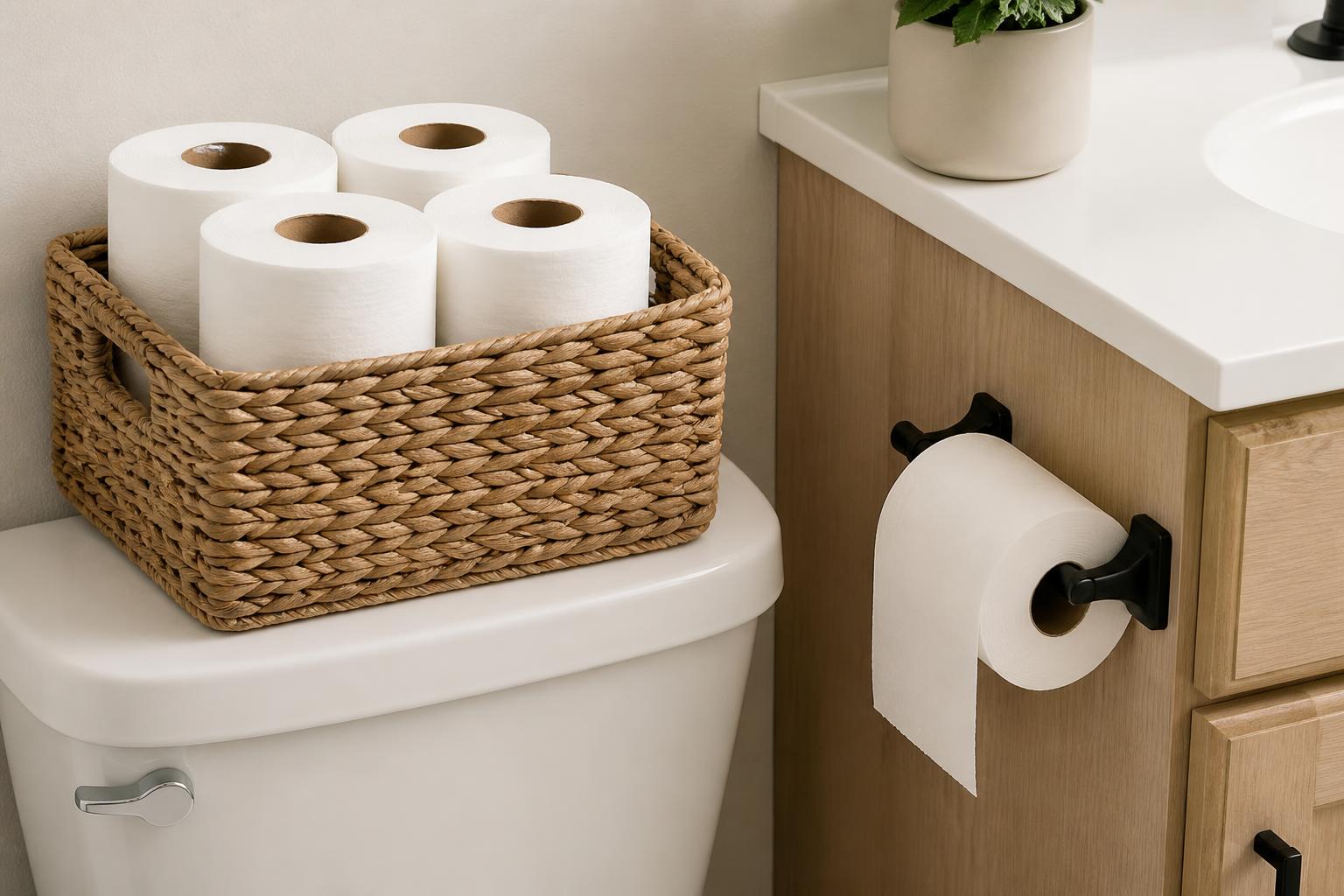
- Toilet paper and paper towels — buy before you need them, not after
- Hand soap and dish soap — one for the bathroom, one for the kitchen
- Trash bags — get a box; you’ll use more than you think
- Basic cleaning supplies — all-purpose cleaner, sponge, microfiber cloths
- A plunger — do not skip this. You don’t want to discover why you need one at 11 PM
- Shower curtain and liner — most apartments don’t provide these
- Bedding — sheets, pillow, and a blanket so you can sleep the first night
Common mistake: People buy decorative items first and forget the functional basics. If you’re on a budget, function wins every time.
Applicability note: This list assumes a standard apartment with running water, electricity, and a working kitchen. If you’re moving into a furnished place or a sublet, check what’s already there before buying anything. Some landlords provide appliances, curtain rods, or even basic furniture — ask for an inventory list before you spend money on items you won’t need.
Kitchen Essentials: Cook Before You Decorate
You don’t need a full chef’s setup, but you do need to feed yourself. Start with the tools that let you cook actual meals — not just heat up leftovers.
Cookware and Bakeware
A solid nonstick set covers most of your cooking needs without taking up half your cabinets. The Made In Cookware – 7 Piece ProCoat Non Stick Pot and Pan Set includes a 10″ frying pan, 8-quart stock pot, 4-quart sauté pan, and 4-quart saucepan — everything you need for pasta, stir-fry, soup, and one-pan meals. The nonstick surface means you can cook with less oil, which is easier for beginners and healthier overall.
If you’re on a tighter budget, buy just two pieces: a 10-12″ skillet and a 4-quart pot with a lid. That covers most meals for one or two people.
What this means for your setup decision: If you cook more than twice a week, the full set pays for itself because you won’t need to replace cheap pans that warp or lose their coating. If you mostly eat out or use a meal plan, the two-piece starter approach is fine — you can add pieces later when you actually need them. The risk of buying the full set upfront is that you might not use half of it, and nonstick coatings degrade faster when pans sit unused.
Dishes and Utensils
You need enough dishes for yourself plus a couple of guests. The MALACASA 12 Pieces Dinnerware Set gives you four dinner plates, four dessert plates, and four bowls for around $68. It’s chip-resistant and dishwasher-safe, which matters when you’re washing dishes by hand or sharing a machine with roommates.
For utensils, grab:
- Cooking: spatula, wooden spoon, tongs, ladle
- Eating: forks, knives, spoons — at least 8 of each if you plan to host
- Cutting: one chef’s knife and one cutting board (plastic is easier to clean than wood)
How to verify before you buy: Check whether your apartment has a dishwasher before you commit to dishwasher-safe claims. If you’re hand-washing everything, look for lightweight pieces you can handle easily — heavy ceramic sets get annoying fast when you’re washing every plate by hand. Also confirm your cabinet depth: some apartment kitchens have shallow upper cabinets that won’t fit standard dinner plates standing upright.
A realistic trade-off: Cheap utensil sets (under $20) often include flimsy spatulas that melt against hot pans and knives that dull within weeks. Spend a little more on individual pieces you’ll use daily — one good spatula and one decent chef’s knife beat a 20-piece set of junk. The downside is that buying individually costs more upfront, but you won’t be replacing melted tools every few months.
Bathroom: Keep It Simple but Complete
The bathroom is small, but it has a lot of small items that add up fast.
- Bath mat — get one with a non-slip backing
- Shower caddy — essential if you have roommates and shared storage
- Towels — 2 bath towels, 2 hand towels, 2 washcloths per person
- Toilet brush and holder — you’ll need it sooner than you think
- Medicine cabinet basics — pain reliever, bandages, thermometer, antacid
Common mistake: Buying one nice towel instead of two functional ones. Rotate them so they dry completely between uses — damp towels get musty fast.
What can go wrong: If your bathroom has no exhaust fan, towels and bath mats stay damp for much longer. That’s not just a smell issue — it can lead to mildew on your towels and even on the walls. If your bathroom lacks a fan, buy a quick-dry bath mat and hang towels over the shower rod or a door hook after every use. You may also need a small dehumidifier if the space stays humid for hours after showers.
Bedroom: Sleep Matters More Than Style
Your bed is the one piece of furniture worth spending on. A good mattress matters for your back and your sleep quality, but you can start with a budget-friendly option and upgrade later.
Minimum setup:
- Mattress (or mattress + box spring if your frame requires it)
- Bed frame or platform — even a cheap one keeps your mattress off the floor and prevents mold
- Sheets — get two sets so you can wash one while using the other
- Pillows — 2 per person is a good baseline
- Comforter or duvet + insert
- A lamp — overhead lighting is harsh for winding down
Decision rule: If you’re choosing between a nicer mattress and nicer decor, pick the mattress. You’ll spend a third of your life on it.
How to confirm fit: Measure your bedroom doorframe and stairwell before buying a bed frame or mattress. Many apartment buildings have narrow hallways and tight staircases, and a queen mattress that won’t fit up the stairs is a nightmare you can avoid with a tape measure. Also check whether your lease requires a specific bed frame type — some landlords prohibit metal frames that can scratch hardwood floors.
A realistic limitation: A cheap mattress (under $300) will likely sag or lose support within two to three years. That’s fine if you plan to upgrade once you have a steady income, but if you’re buying a mattress you expect to last five-plus years, budget at least $600–$800. The trade-off is real: cheaper now means replacing sooner, and you’ll feel the difference in your sleep quality long before the mattress visibly wears out.
Living Room: Start Functional, Add Comfort Later
Your living room is where you’ll hang out, study, or host friends. But you don’t need a full furniture set on day one.
Priority order:
1. Something to sit on — a couch, futon, or even a couple of sturdy chairs
2. A surface — coffee table or side table for drinks and remotes
3. Lighting — floor lamp or table lamp for ambiance
4. Rug — optional but makes the space feel less echoey
Budget tip: Check Facebook Marketplace, Craigslist, or Buy Nothing groups before buying new. First apartments are the perfect time for secondhand furniture — just inspect for bed bugs and stains before you commit.
What can go wrong with secondhand furniture: Bed bugs are the big risk, but they’re not the only one. Used upholstered furniture can carry odors, pet dander, or allergens that trigger reactions you didn’t know you had. Before you buy, check every seam and crevice with a flashlight, ask about the item’s history (smoking households, pets), and be prepared to walk away if something feels off. For fabric items, a steam cleaner rental ($20–$30 for a day) can help, but it won’t fix a serious infestation.
Cleaning Supplies: The Starter Kit
You don’t need a closet full of specialty products. This covers 90% of what a typical apartment requires:
- All-purpose cleaner — works on counters, tables, and most surfaces
- Glass cleaner — mirrors and windows
- Broom and dustpan — the kelamayi Broom and Dustpan Set has an extendable pole and self-cleaning teeth that scrape hair and debris off the bristles — useful if you have pets or long hair
- Mop — a basic sponge mop or Swiffer-style system for hard floors
- Vacuum — if you have carpet, this is non-negotiable. A cheap stick vacuum beats nothing
- Laundry supplies — detergent, dryer sheets, and a hamper
Common mistake: Buying a mop but no bucket, or a vacuum without checking if it handles your floor type. Read the product description before you buy.
How to verify before you buy: Check your flooring before choosing cleaning tools. If you have all hard floors, a vacuum with a hard-floor setting or a broom-and-mop combo is enough — you don’t need a heavy upright vacuum. If you have carpet, check the pile height; some budget vacuums struggle with thick carpet and leave debris behind. Also confirm whether your building has in-unit laundry or a shared laundry room — that changes how much detergent and how many hampers you actually need.
A realistic mismatch: The extendable pole on the kelamayi broom adjusts from about 38 to 50 inches. If you’re under 5’4″ or over 6’2″, the standard adjustment range might not feel comfortable — test the length before you commit, or look for a broom with a wider adjustment range. It’s a small issue, but an awkward broom handle makes sweeping a chore you’ll avoid.
The “Wait, I Forgot” List
These are the items people forget until they need them at the worst possible moment:
- First aid kit — bandages, antiseptic, gauze, medical tape
- Flashlight — power outages happen; your phone flashlight isn’t enough
- Basic tool kit — screwdriver, hammer, pliers, measuring tape
- Extension cords and power strips — check your apartment’s outlet layout before buying
- Fire extinguisher — check if your building provides one; if not, get a small kitchen-rated one
- Carbon monoxide detector — if your building doesn’t have one, buy one
Heads-up: If you’re 18–24 or a college student, you can get a 6-month free trial of Prime, then $7.49/month — which covers free fast shipping on the gear above, plus Prime Video, Amazon Music, Prime Gaming, and 5% cash back on Amazon purchases. It’s worth setting up before you start ordering your apartment haul. Start your 6-month free trial here
What to Skip (At Least for Now)
Some things are nice to have but not worth the money or space in a first apartment:
- Specialty kitchen gadgets — air fryers, stand mixers, and bread makers can wait until you know you’ll use them
- Formal dining sets — you’ll eat at the counter or coffee table more often than you think
- Decorative items — candles, vases, and art can come later; focus on function first
- Extra linens — one set of guest towels is enough; you’re not running a hotel
Why the “skip” list matters: The cost of buying things you don’t use isn’t just the purchase price — it’s the space they take up in a small apartment and the mental load of owning stuff you feel guilty about not using. A $40 air fryer that sits in a cabinet for six months is $40 you could have spent on a better mattress or a proper tool kit. If you genuinely miss a specialty item after a month, buy it then — you’ll know you’ll actually use it.
The 2-Week Rule
Here’s a practical way to avoid overspending: Only buy what you need for the first two weeks. Live in the apartment, notice what you’re missing, and buy as you go. You’ll discover that:
- You use the same three pans over and over
- You need more trash bags than you expected
- You don’t actually need that second lamp
- You definitely need a plunger
This approach saves money and prevents buying things that just take up space.
The limitation of this rule: The 2-week rule works for most items, but not for everything. You need a plunger, shower curtain, and bedding before day one — you can’t wait to discover you need them. The rule works best for discretionary items like decor, extra cookware, and specialty tools. For anything that affects your safety, hygiene, or ability to sleep, buy it upfront.
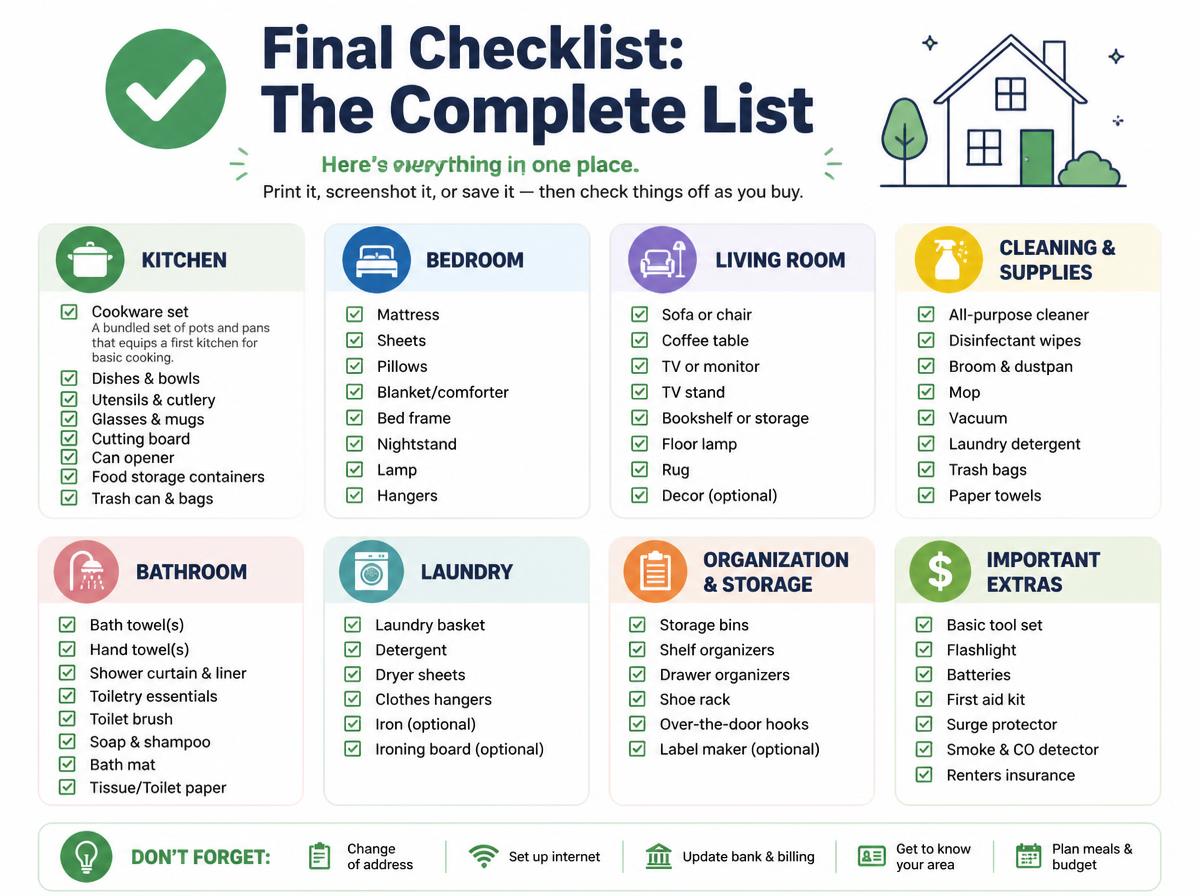
Final Checklist: The Complete List
Here’s everything in one place. Print it, screenshot it, or save it — then check things off as you buy.
Kitchen: Cookware set, dishes, utensils, chef’s knife, cutting board, dish soap, sponges, trash bags, food storage containers
Bathroom: Shower curtain + liner, bath mat, towels, toilet brush, plunger, hand soap, medicine cabinet basics
Bedroom: Mattress, bed frame, sheets (2 sets), pillows, comforter, lamp, hamper
Living room: Seating, table, lamp, rug (optional)
Cleaning: All-purpose cleaner, glass cleaner, broom + dustpan, mop, vacuum, laundry detergent, dryer sheets
Emergency: First aid kit, flashlight, basic tools, extension cords, fire extinguisher, carbon monoxide detector
Start with the non-negotiables, add the functional pieces, and let the decorative stuff come later. Your first apartment doesn’t need to be perfect — it needs to work.
<!– cluster-navigation –>
Explore This Topic
Related guides in this cluster: