
How to Build Credit at 18 Without Getting Burned
Turning 18 means you can finally open accounts in your own name — and that includes credit. Building credit now matters because landlords, car insurers, and even some employers check it. The good news: you don’t need a high income or a cosigner to start. You just need the right first moves and a few rules to avoid the traps that turn a fresh start into a years-long headache.

Start With a Secured Card, Not a Store Card
A secured credit card is the standard first step for an 18-year-old with no history. You put down a cash deposit — typically $200 to $500 — and that deposit becomes your credit limit. Use it for small purchases, pay the statement balance in full each month, and after 6 to 12 months most issuers will upgrade you to an unsecured card and return your deposit.
Why not a store card? Retail cards often approve people with no credit, but they come with high interest rates and can only be used at one store. They don’t build your credit any faster than a secured card, and they tempt you into spending more than you planned.
Before you apply, check the card’s terms for:
- Annual fee (many secured cards charge one; some don’t)
- Whether the deposit is refundable
- Whether the issuer reports to all three credit bureaus (Equifax, Experian, TransUnion) — most do, but confirm
Branch point: If you get denied for a secured card — which happens more often than you’d think, especially with no income — don’t apply for five more cards. Each application dings your score. Instead, ask the issuer why you were denied (they’re required to tell you), then either add a cosigner, become an authorized user first, or wait 3–6 months and reapply with a smaller deposit request.
Become an Authorized User First, If You Can
If a parent or trusted relative has a credit card with a long on-time payment history, ask to be added as an authorized user. You get a card with your name on it, but the primary account holder is still responsible for the bill. Their positive history appears on your credit report, which can give you a usable score in a few weeks.
This only works if the primary holder manages their credit well. If they carry high balances or miss payments, that history lands on your report too. Set a clear agreement: you won’t use the card, or you’ll only use it for one recurring purchase you pay for immediately.
Verification step: About 30–45 days after you’re added, check your credit report at AnnualCreditReport.com (free weekly through 2024) and confirm the account actually shows up. If it doesn’t, the issuer may not report authorized users — some don’t — and you’re not building credit at all. Ask the primary holder to confirm with their issuer before you assume it’s working.
Keep Your Credit Utilization Under 30%
Your credit utilization — the percentage of your limit you’re using — is the second biggest factor in your score after payment history. On a $300 secured card, spending $90 keeps you at 30%. Spending $250 pushes you to 83%, which signals risk and drops your score.
The fix is simple: treat the card like a debit card. Only charge what you already have in your checking account, and pay the statement balance in full every month. You’ll never pay interest, and your utilization stays low.
Failure mode to watch for: If your score drops even though you’re paying on time, utilization is almost always the culprit. This happens when a card issuer raises your limit but you keep spending the same amount — or when you open a new card and your total available credit shifts. Check your utilization percentage on your latest statement. If it’s above 30%, pay down the balance before the statement closing date (not the due date), and it’ll usually recover within a month.
Never Miss a Due Date — Set Up Autopay Now
One missed payment stays on your credit report for seven years. That’s not a scare tactic; it’s how the system works. The easiest way to avoid it is to set up autopay for at least the minimum payment the day you activate the card. Then set a second reminder on your phone to check the statement and pay the full balance.
If you can’t pay the full amount one month, pay the minimum on time. Late fees and interest hurt, but a late payment on your report hurts much longer.
Escalation threshold: If you’re ever more than 30 days past due, stop trying to fix it yourself. Call the issuer immediately, explain the situation, and ask if they’ll waive the late fee or remove the mark as a courtesy — many will for a first offense. If they won’t, and the payment is more than 60 days late, consider contacting a nonprofit credit counselor (like the NFCC) before the account goes to collections. That’s the point where DIY fixes stop working and professional help is worth it.
Watch Out for Credit-Builder Loans and Rent-Reporting Gimmicks
Credit-builder loans — where you make payments into a locked account and get the money back at the end — can work, but they’re not necessary if you already have a secured card. Some come with fees or high interest that eat into the benefit.
Rent-reporting services that claim to put your rent payments on your credit report are more complicated. Only a few landlords use them, and the services often charge monthly fees. Your credit score won’t improve just because you pay rent on time unless the service is actually reporting to the bureaus — and many aren’t.
How to verify before you pay: Ask the service for the names of the three credit bureaus they report to, then call that bureau directly to confirm the service is registered. If they can’t name a bureau, walk away. Also check whether they report to all three or just one — a score boost on only one bureau won’t help you with most lenders.
How Long Until You Have a Good Score?
With a secured card used responsibly, you’ll typically see a FICO score within 6 months. After a year of on-time payments and low utilization, most people land in the 650–700 range, which qualifies for better cards and apartment applications. It takes about two years of consistent history to reach “good” territory (700+).
There’s no shortcut. Every “credit hack” that promises a fast score jump either costs money or involves risk you don’t need at 18.
Common Mistakes That Burn First-Timers
- Closing your first card after you get a better one. Your credit score rewards age. Keep your oldest account open, even if you stop using it.
- Applying for multiple cards at once. Each application triggers a hard inquiry that dings your score a few points. Space applications out by at least 6 months.
- Using a card to “build credit” by carrying a balance. This is a myth. You build credit by using the card and paying the statement balance in full. Carrying a balance only costs you interest.
- Cosigning for a friend. If they miss payments, your credit takes the hit. You have no control over their behavior, and you’ll be stuck with the debt if they default.
Your First-Year Checklist
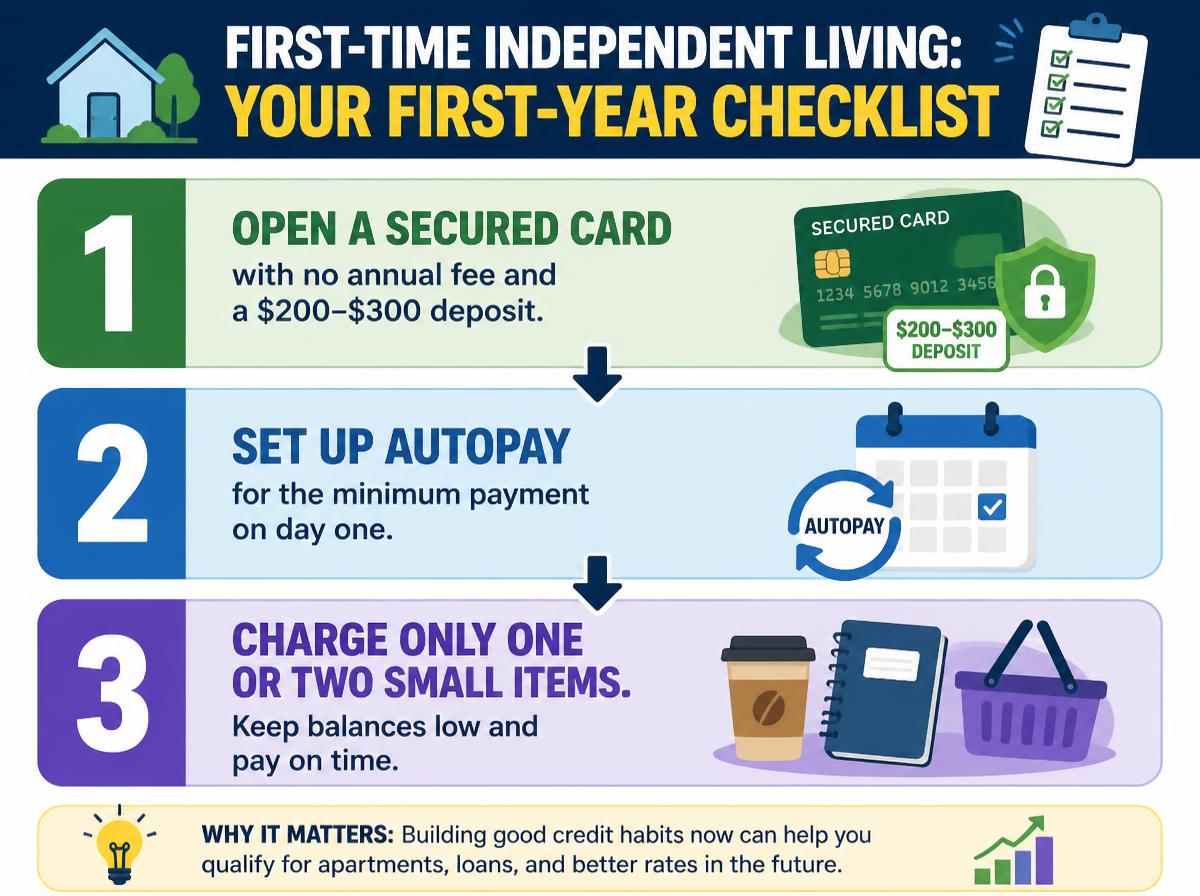
1. Open a secured card with no annual fee and a $200–$300 deposit.
2. Set up autopay for the minimum payment on day one.
3. Charge only one or two small recurring purchases (like a streaming subscription).
4. Pay the statement balance in full every month.
5. Check your credit report for free at AnnualCreditReport.com after 6 months — confirm your card is reporting and your utilization is under 30%.
6. After 12 months, ask your issuer to upgrade you to an unsecured card.
7. Keep your first card open, even after you qualify for better ones.
Building credit at 18 is boring by design. Use a small card, pay it off every month, and wait. The people who get burned are the ones looking for a faster path — and there isn’t one that doesn’t cost you more than it’s worth.
<!– cluster-navigation –>
Explore This Topic
Related guides in this cluster: