
What NOT to Bring to College: 15 Things to Leave Home
Moving into a dorm room is a game of inches. You get one carload, a tiny shared room, and a bed that’s probably not the size you’re used to. Most packing lists tell you what to buy—but the real skill is knowing what to leave behind.
Here are 15 things that waste space, cause roommate friction, or just sit untouched until spring move-out.

1. Your Full Wardrobe
Bring clothes for two weeks, not two seasons. Dorm closets are narrow, and you’ll wear the same 10 outfits on rotation anyway.
The rule: If you haven’t worn it in the last month at home, it stays home. Pack layers for your climate, one nice outfit, and enough socks to survive laundry procrastination. Swap seasonal clothes when you go home for breaks.
The trap: Bringing your entire shoe collection. You’ll wear sneakers, shower shoes, and one pair of going-out shoes. Everything else lives under your bed and collects dust.
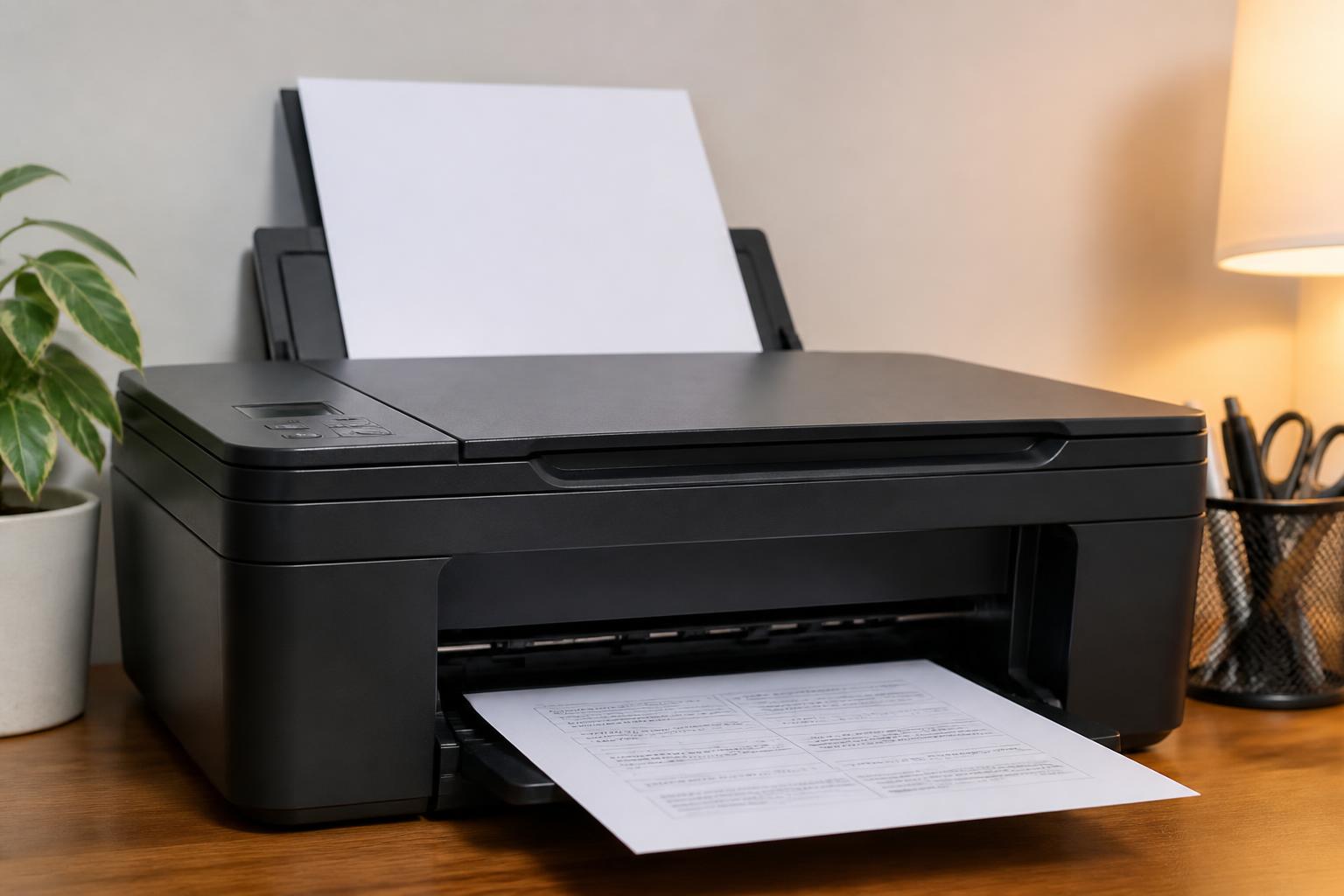
2. A Desktop Printer
Printers are the #1 dorm item that breaks, runs out of ink, and gets abandoned. Campus libraries and computer labs have printing built into your tuition or student fees.
The exception: If your major requires frequent printing (art, architecture), check if your department has a dedicated print lab first. Most do—and they use better paper than you’d buy anyway.
3. Valuables and Heirlooms
Leave your grandmother’s jewelry, your expensive watch, and anything irreplaceable at home. Dorm rooms have shared entrances, maintenance staff with keys, and people wandering in and out during the first week.
The rule: If you’d be devastated to lose it, don’t bring it. Renters insurance for students is cheap if you want coverage for your laptop and bike. Your parents’ homeowners policy may also cover your stuff at school—call and ask before buying anything.
4. A Full-Size First Aid Kit
You don’t need 200 items. You need:
- Pain reliever
- Bandages
- Thermometer
- Antacids
- Cough drops
That’s it. The campus health center handles everything else, usually free or low-cost. If you take prescription meds, bring a 30-day supply and set up the campus pharmacy before you arrive.
5. Your Entire Book Collection
Physical books are heavy, and you’ll have textbooks eating your shelf space. Bring one or two pleasure reads for the first month.
Better move: Use the library or a Kindle app for everything else. If you’re an English major, you’ll get most texts as PDFs anyway. That 40-book shelf from your bedroom? It stays.
6. A Full Kitchen Setup
Dorm kitchens are shared, tiny, and often locked. You don’t need a toaster, blender, air fryer, and Instant Pot.
What actually gets used:
- Microwave-safe mug
- One bowl, one plate, one set of utensils
- Water bottle
- Coffee maker or kettle (if you drink either)
Check your dorm’s rules before bringing any appliance with a heating element. Many ban them outright, and a seized air fryer is a $60 mistake.
7. Your Desktop Computer
Unless you’re a PC gamer or video editor, a laptop handles everything. Desktops take up desk space, create cable mess, and are harder to secure.
The exception: If you’re bringing a desktop for gaming, make sure your roommate agrees and you have a lock for your door. Also, your desk is half the size you think it is. Measure it before you commit to a dual-monitor setup.
8. Candles and Incense
Almost every dorm bans open flames. Candles, incense, and oil diffusers with flames are fire hazards and will get you a fine. RA’s check rooms during breaks, and the smell doesn’t stay in your room—it seeps into the hallway.
The workaround: A small essential oil diffuser or wax warmer (if allowed) gives you scent without the fire risk. Check your housing contract first. Some dorms ban all fragrance devices due to roommate allergies.
9. More Than One Set of Sheets
You’ll change your sheets maybe four times a year. One set is enough.
The upgrade that matters: Dorm mattresses are notoriously uncomfortable. A mattress topper is worth the space. And if you’re in a Twin XL, standard Twin sheets won’t fit—check the size before you buy. A fitted sheet that’s too small will pop off the corners every single night.
10. Your High School Memorabilia
That varsity jacket, prom photos, and yearbook stack? They’ll sit in a box under your bed and collect dust.
The exception: One small photo or item that makes your room feel like home is fine. A box of 30 is clutter. If you’re homesick, a video call hits harder than a trophy you can’t even see from your bed.
11. A Toolbox
You don’t need a full tool set. You need:
- Command strips (the real MVP of dorm life)
- A screwdriver (maybe)
- Scissors
Most dorms have maintenance staff who fix things for free. Don’t bring a 50-piece toolkit you’ll never open. If you hang something with a nail and damage the wall, that’s a repair bill on your housing account.
12. Expensive Cookware
If you’re in a dorm with a kitchen, the pots and pans there are probably beat up but functional. Don’t bring your parents’ good cookware—it’ll get scratched, burned, or stolen.
Better move: One nonstick pan and one pot, bought cheap, is plenty for ramen, eggs, and microwave meals. If you buy new, keep the receipt—if your dorm bans cooking appliances, you can return it.
13. Your Car
Freshman parking passes are expensive, waitlisted, or nonexistent. You’ll also be the designated driver for everyone who didn’t bring a car.
The math: Parking pass ($200–$600) + gas + insurance vs. Uber rides and the campus shuttle. Most students find the car isn’t worth it until sophomore year. If you do bring one, check the parking office’s website before move-in day—some lots sell out in the first week.
14. A Giant Laundry Hamper
The 80-liter ones seem practical until you’re dragging them down three flights of stairs. A collapsible or medium-size hamper is easier to carry and stores flat when empty.
The pro move: Get a hamper with handles that’s light enough to carry with one hand—you’ll need the other for your detergent and the stair rail. If your dorm has an elevator, this matters less, but you’ll still want something that fits in the laundry room without blocking the aisle.
15. “Just in Case” Items
The extra pillows, the backup charger, the second lamp, the winter coat you bring in August “just in case.” Every one of these is space you don’t have.
The rule: If you can buy it within 20 minutes of campus for under $20, leave it home. Target and Walmart are your backup plan. For bigger items, you can have them shipped from home in a week—your parents won’t mind one trip to the post office.
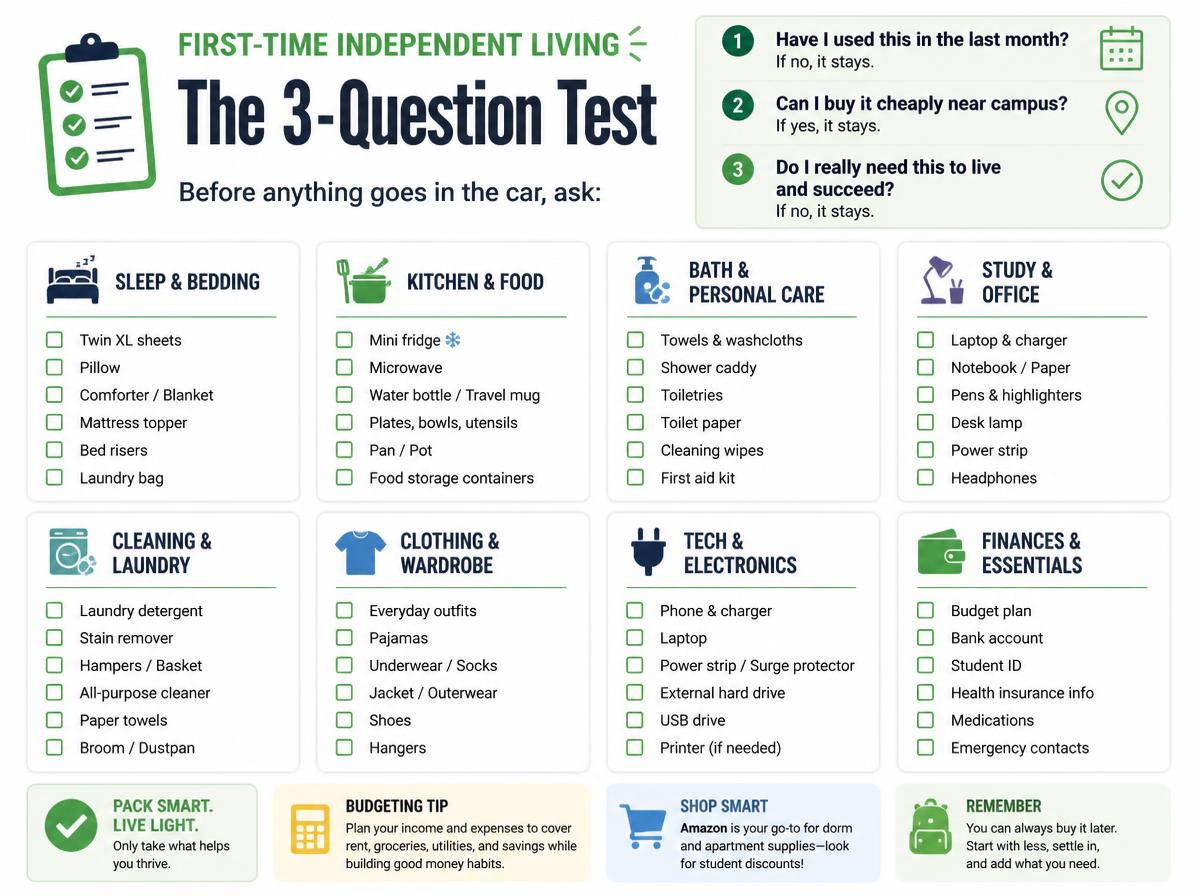
The 3-Question Test
Before anything goes in the car, ask:
1. Have I used this in the last month? If no, it stays.
2. Can I buy it cheaply near campus? If yes, it stays.
3. Would I be upset if it got damaged or stolen? If yes, it stays.
If you’re still unsure, remember: you can always have things shipped from home. You can’t un-bring a car full of clutter.
What to Bring Instead
The stuff that actually earns its space:
- Mattress topper
- Command strips
- One set of Twin XL sheets (like the Bare Home Sheet Set 1800 Ultra-Soft with 2 Pillowcases — $29.06 and made for dorm beds)
- Shower shoes
- A shower caddy that hangs or sticks (the YASONIC Shower Caddy Adhesive holds 40 lbs and doesn’t require drilling into tile)
- A collapsible laundry hamper (the Lifewit 80L Large Laundry Baskets stand upright on their own and fold flat for storage)
Once you’re settled and realize you need a few things shipped fast, Amazon Prime’s student plan covers you: ages 18–24 or enrolled students get a 6-month free trial, then $7.49/month, with free fast shipping, Prime Video, Amazon Music, Prime Gaming, exclusive deals, and 5% cash back on Amazon purchases. Start your 6-month free trial here.
When to Stop Packing and Start Loading
Here’s the reality check: if your car is full and you still have items on your bed, you’re done. Don’t start playing Tetris with the trunk to fit “one more thing.” The items still on your bed are the ones you don’t actually need.
The sign you’ve overpacked: You can’t see out the rear window of your car. That’s not a packing problem—that’s a safety issue. Unload the non-essentials before you drive.
The exception to the rule: If you’re bringing something that genuinely makes your room feel like yours—a specific pillow, a favorite blanket, a poster—that’s not clutter. That’s your anchor for the first month. Bring it.
The failure mode to avoid: The “I’ll organize it when I get there” trap. Every item you bring needs a home the day you arrive. If you can’t picture where it goes, it stays home. Unpacking boxes in week three because you didn’t sort before move-in is how things get lost or broken.
Your dorm room is about 12 by 15 feet, shared with a stranger, and temporary. Every item you bring takes up space you’ll have to live in for nine months. Pack the essentials, leave the “just in case” stuff at home, and remember that moving out in May is a lot easier when you moved in with less.
<!– cluster-navigation –>
Explore This Topic
- Back to Dorm Packing & Move-In
Related guides in this cluster: